

UNAIDS: From sunsetting to a new dawn

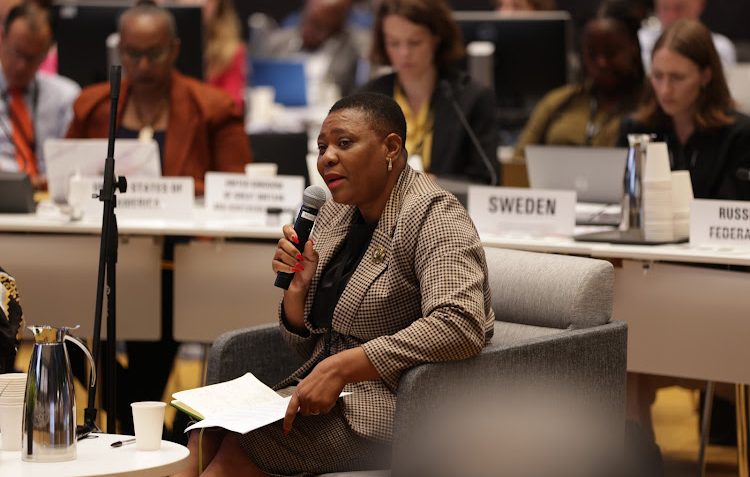
After six months co-facilitating the Working Group on UNAIDS’ transition and integration, Frontline AIDS’ Director of Advocacy Fionnuala Murphy explains the latest board decisions and what they mean for the future of the UNAIDS Joint Programme.
Most advocacy outcomes represent small steps, but on 25 October, Frontline AIDS was part of something big: the UNAIDS Board formally rejected a UN80 proposal to sunset the Joint Programme and approved a new strategic direction for UN action on HIV and AIDS.
How we got here
Considering what was at stake, this was a huge decision. In September 2025, the UN Secretary-General’s UN80 reform initiative recommended “sunsetting” UNAIDS. Over 1,000 organisations, including Frontline AIDS and many of our partners, signed a statement opposing what we saw as a shutdown. At December’s board meeting, UN Deputy Secretary-General Amina Mohammed acknowledged our concerns and conceded that, when it came to UNAIDS, the UN “must not be in a hurry to fail.”
Following these discussions, the UNAIDS Board established a Working Group tasked with developing a plan on the further transition and integration of UNAIDS into the UN system and beyond. In March, I became its co-facilitator, alongside South Africa’s Deputy Health Minister Dr Joe Phaahla and Canada’s former UN Ambassador Bob Rae. Across 31 meetings, we heard from affected communities, implementing countries, the UNAIDS Secretariat, Cosponsors, and strategic partners like the Global Fund, as well as other global health partnerships, before agreeing on a set of recommendations.
What we recommended
Our report makes crystal clear that the Working Group rejects proposals to sunset UNAIDS in 2026. It emphasises that HIV remains a major global concern and that a joined-up UN response is still needed. It also argues that the UNAIDS Cosponsors must play an increasing role in this partnership, with full leadership of the different results areas in the Global AIDS Strategy.
Importantly, our report was equally clear that Cosponsors’ leadership must be supported by a Hub, which will be much more streamlined than the current Secretariat, with clear functions that only it can play: global leadership and advocacy for ending AIDS and delivering the Global AIDS Strategy; coordination across the Joint Programme through a unified budget and workplan, and gathering and analysing multisectoral data with Cosponsors, governments and communities to support accountability.
Putting communities at the centre
Excitingly, the approved direction commits to co-leadership with communities and civil society, reflecting the Greater Involvement of People living with HIV and AIDS (GIPA). Proposals include community co-creation positions in the Hub and community engagement in regional and country Joint UN Teams and catalytic activities. Two community representatives will also join the transition task team that will be set up to implement our recommendations.
The hard questions
One of the more difficult areas our Working Group examined was the Joint Programme’s presence in countries. We could not reach consensus, and our report recognises that appropriate models for Joint Programme support will differ across countries. The task team must develop transition criteria to guide future transitions, and our report suggests that these must consider human rights, gender equality and civic space, alongside epidemiology. Implementing countries and, critically, communities must be involved in any decisions taken.
As one of the three co-facilitators, I see real opportunities for transformation in the direction we have proposed. Still, it’s important to be open that some stakeholders wanted more. Donors sought reassurance that the proposed model could remain viable at the level of funding that is likely. That concern is understandable – a transition plan must be financially realistic – but it reflects a deeper tension. Donors want faster cost reductions, but these must be balanced against countries’ needs for support, and the concerns of communities. Our report argues that countries should transition only when agreed criteria are met and governments and communities agree. The difficult question facing Board members now is what happens if many countries are not ready?
Other Board stakeholders question whether our proposals are transformative enough in the shift of responsibilities from the Hub to Cosponsors. From my experience of the Working Group, and before that the Board, ending duplication and silos and rebuilding trust and collaboration would be among the Joint Programme’s most radical changes.
What happens next?
Hub and Cosponsor representatives must approach the task team ready to listen deeply to one another, compromise and, most importantly, put people living with and affected by HIV at the front of every decision.
I know that the two community representatives will both support and challenge them on this. With Executive Director Winnie Byanyima due to leave at year-end, leadership will also be essential. The funding crisis consumed too much of 2025, and transition discussions absorbed scarce time and energy in 2026. Now we owe it to people on the frontlines of the HIV pandemic to ensure that delivery is the priority in 2027, alongside transition.
At Frontline AIDS, we say “we are stronger, together”, but that motto isn’t ours alone. With Cosponsors and the Hub working side by side, and with communities, the UNAIDS Joint Programme can be stronger than ever. It can move forward with efficiency, drive and courage. It can deliver on the Global AIDS Strategy. It can finally meet our shared goal of ending AIDS.
Further Reading
Peer supporter Domingas counsels young people living with and affected by HIV...
Tags
UNAIDS