HIV, cervical cancer and women’s health: why integrated services matter

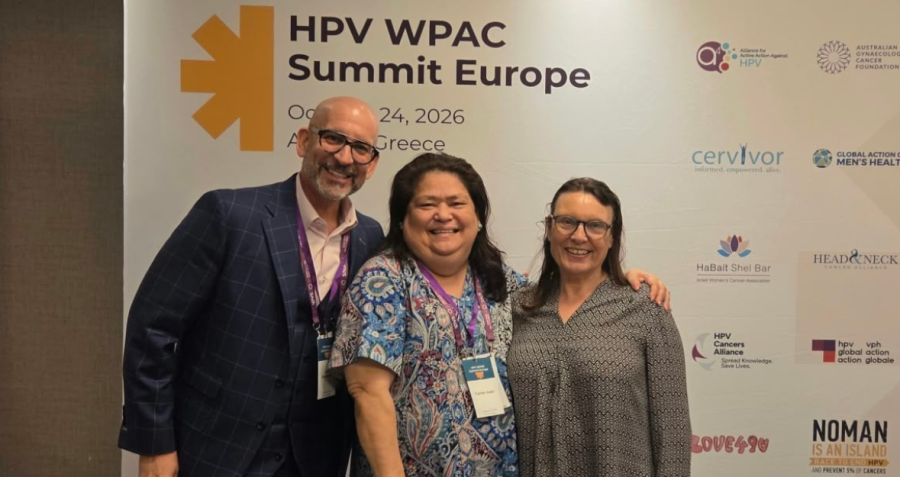
Women and girls living with HIV are at increased risk of cervical cancer and other overlapping health conditions, including female genital schistosomiasis, but too often they’re diagnosed and treated by separate health services. At IPVS 2026, the recent International Papillomavirus Society Conference, Frontline AIDS made the case for integrated services.
What is the link between HIV and cervical cancer?
Human papillomavirus (HPV) is a very common virus that most people will have at some point in their lives. In people with a healthy immune system, the virus usually goes away on its own. But people living with HIV are far less likely to clear HPV infections and more likely to develop cancers.
Women living with HIV have a 6x greater risk of developing invasive cervical cancer, which is an AIDS defining illness.
Cervical cancer can be eliminated and there has been real progress
IPVS 2026 highlighted the progress towards reaching the 90:70:90 targets towards eliminating cervical cancer (WHO Global Strategy for Cervical Cancer Elimination). Thanks to the HPV vaccine, cervical cancer can now be eliminated. Yet despite this, globally, a woman dies from cervical cancer every two minutes.
The core targets for 2030:
• 90% of girls fully vaccinated with the human papillomavirus (HPV) vaccine by 15 years of age.
• 70% of women screened with a high-performance test (such as HPV DNA testing) by 35 and again by 45 years of age.
• 90% of women identified with cervical disease (pre-cancerous lesions or invasive cancer) receiving appropriate treatment and care.
Who is being left behind?
Significant challenges remain. There is huge inequality between high-income and low- and middle-income countries in terms of access to services and support to follow through to treatment.
Girls and women living with HIV are a really important group we are leaving behind. This is despite clear targets and guidance from UNAIDS and The World Health Organization, including earlier and more frequent screening for women living with HIV.
We save a woman’s life by ensuring that she has access to antiretroviral therapy for HIV, yet she dies from cervical cancer. Services must be integrated and available to all, without exception.” – UNAIDS
How can we use existing HIV infrastructure to achieve cervical cancer elimination goals?
The HIV community has historically used community-led approaches and peer supporter models to access hard-to-reach communities, including through mobile clinics. This model has also reduced stigma and increased access to services through linking testing, treatment and care, ensuring follow-through to treatment. This model provides valuable, evidence-based learnings for the HPV and cervical cancer sector.
Studies shared at the conference demonstrated the feasibility and effectiveness of integrating HPV/cervical cancer and HIV services. Several Frontline AIDS partners are already doing this, including Zvandiri in Zimbabwe, LVCT Health in Kenya, Alive Medical Services in Uganda, MACRO in Malawi, SCDI in Viet Nam, MAMTA in India and Alliance for Public Health in Ukraine.
Frontline AIDS at IPVS 2026
Frontline AIDS and Unlimit Health (co-chairs of FIG – the Female Genital Schistosomiasis Integration Group) organised an integration side session at IPVS with other global actors.
We need to work together as HIV and cancer communities to support early and consistent antiretroviral initiation and adherence to help reduce the incidence and progression of cervical precancerous lesions.
And we need to promote women’s integrated health services, including HIV and other sexually transmitted infections, HPV and cervical cancer, and in Africa, female genital schistosomiasis.
Eliminating cervical cancer will take us nearer to ending AIDS and ending HPV-related cancers. We will get there quicker if HPV and cervical cancer is integrated into HIV and other services and programmes.