2025 Annual Report

Read the report

Letter from the Chairman

From community knowledge to global change

2025 was a pivotal year for Frontline AIDS — the year we closed one chapter and began another. It marks the conclusion of our Global Plan of Action, a strategy that steered us through turbulence and tested our resolve. An independent evaluation published this year confirmed what our partners and communities have long known: our distinctive power is to connect.

By amplifying community-led knowledge and practice, we have shaped the policies, standards and resources that determine who lives and who is left behind. Examples range from female genital schistosomiasis being recognised by the WHO as a global health priority, following work undertaken with our partner LVCT in Kenya, to Kimirina, a community organisation in Ecuador, securing a place on the UHC2030 Steering Committee — the global body that shapes universal health coverage policy.

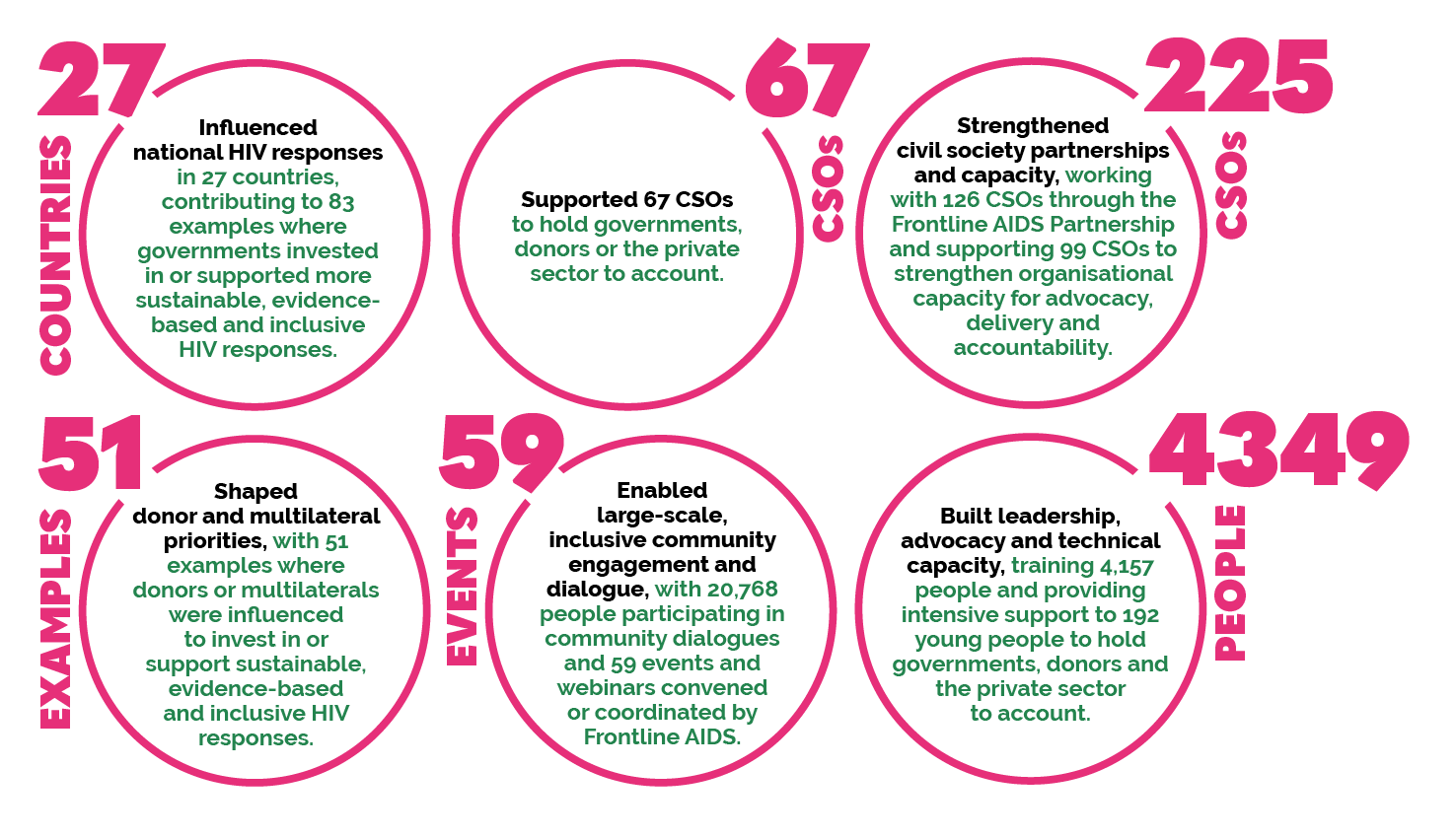
2025 in numbers: what we achieved

These 2025 results contributed to Frontline AIDS meeting or exceeding nearly all targets set for the 2023 – 2025 period.

WE ARE ONE TOGETHER

When the Partnership Council was set up in 2022, the intention was clear: to create a structured and meaningful way for partners to coordinate, collaborate, and have a genuine say in the direction of the partnership.

In 2025, I felt that more strongly than ever. Partners were actively involved in shaping the new strategic direction for the Frontline AIDS partnership. Not through a single consultation, but through sustained regional engagement, in-depth discussions about what needed to change, and honest, if sometimes difficult, conversations. Partners were heard. And our new priorities reflect that as the partnership looks towards the next five years of the HIV response. 

That same spirit of genuine engagement shaped how the partnership responded to the funding crisis. Frontline AIDS was very quick to convene and connect partners — who were facing many of the same challenges, despite the different country contexts — to share intelligence, coordinate advocacy, and understand the real impact on communities affected by HIV. We are now beginning to see the effects of funding cuts on the ground, with infection rates rising among marginalised groups, including key populations1, women, girls and young people, and progress towards ending AIDS is under threat. The ability to generate and consolidate that evidence collectively and be present in global spaces has never mattered more. 

We are one in this partnership. And we are likely to achieve a lot more, and to be a lot stronger, as a collective than as individuals.

Dr Lilian Otiso, Executive Director of LVCT Health and Chair of the Frontline AIDS Partnership Council 

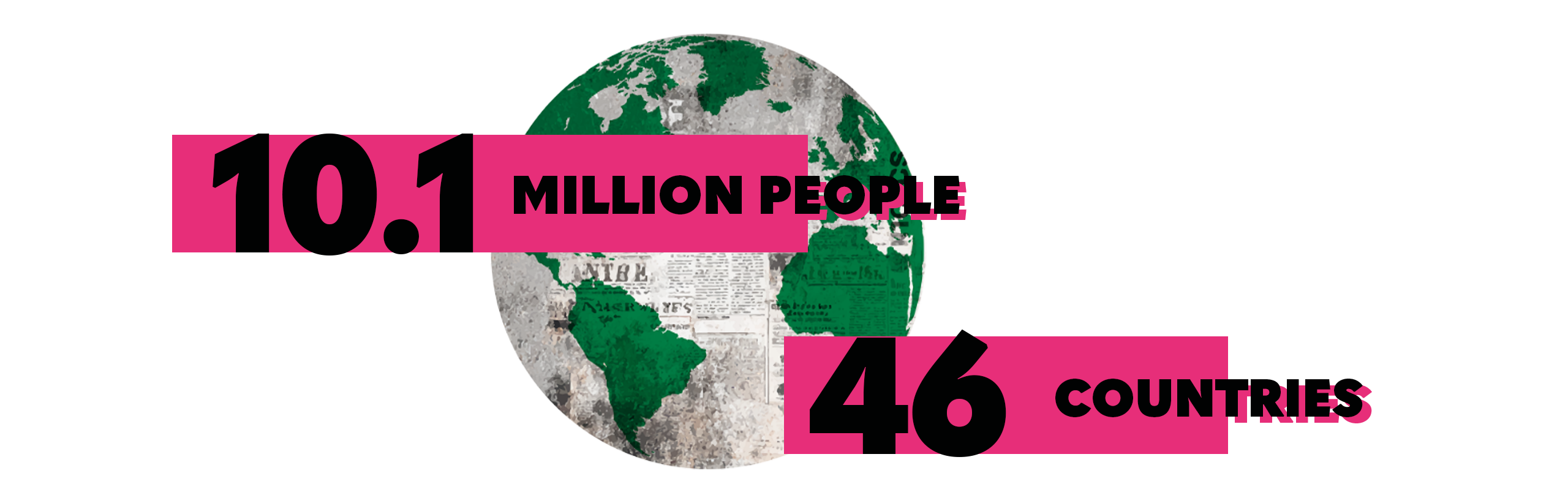
Our Global Partnership footprint 2025

The Frontline AIDS partnership collectively reached: 10.1 million people in 46 countries with sexual and reproductive health and rights interventions and 1,920 community-based or community-led organisations with technical or financial support.

The evidence behind our impact

Between 2023–2025, the Frontline AIDS partnership worked across six interconnected actions — each one a different lever for the same goal: ensuring that communities most affected by HIV are at the centre
of the systems that govern health, rights and funding.

An independent external evaluation of the Global Plan of Action period synthesised around 160 documented outcomes. It found that Frontline AIDS added strength is its connector role: brokering relationships and helping partners access resources, enabling community-led organisations to advocate with impact, and building lived experience into evidence that transforms decisions, guidance, funding and norms.

It also found that we enable community-led organisations to advocate with impact in decision-making spaces where policies, standards and funding are
agreed. We contribute to making change happen at a systems level, by ensuring community-led practice and people’s lived experience informs evidence, decisions, guidance and standards, funding and norms.

performance against our targets

While we reached 75% of our target, the results tell a fuller story: 160 documented examples of government influence across 30 countries, reflecting real depth
and breadth of change. And in one of the most challenging funding environments in recent memory, we achieved 92% of our target for influencing donors and multilaterals; a result that reflects the tenacity of our partners and the strength of the case they made.

Read the full evaluation report

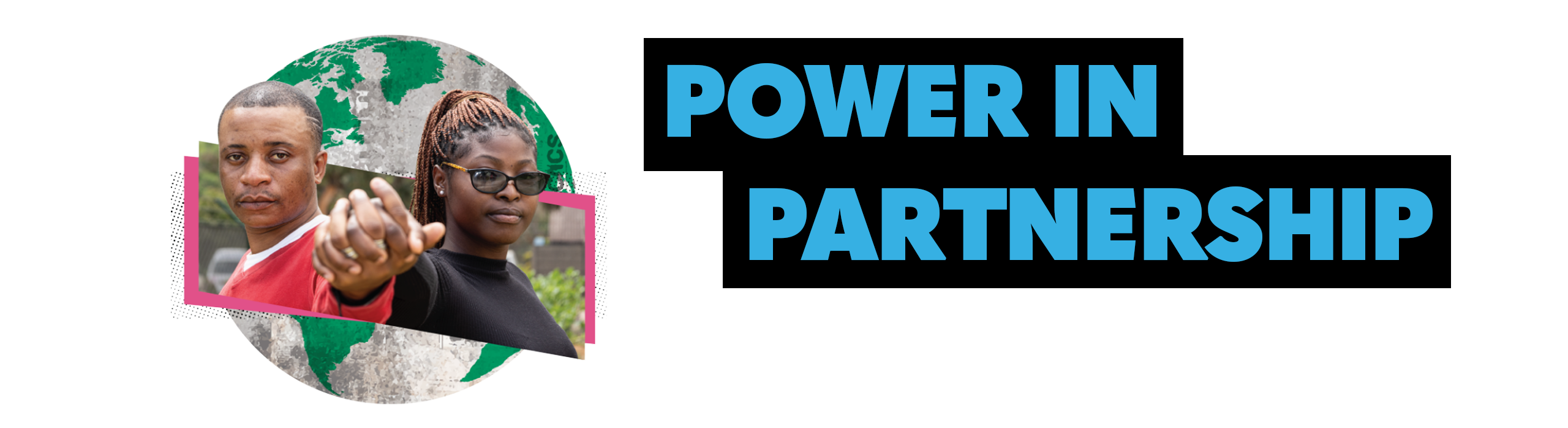
Lessons learned from the evaluation of our Global Plan of Action have directly shaped Power in Partnership. Our new strategic priorities for 2026 – 2030 set out how we will work in collaboration to strengthen health services, champion rights-based responses and scale up community-led approaches that keep delivering in times of crises.

Our new strategy sets out how we will focus on three strategic priorities to achieve our goal to build a future free from AIDS and respond to challenges through the power of our global partnership. We will:

  • Strengthen health systems by working collaboratively to secure sustainably financed, resilient and inclusive HIV and health services
  • Champion human rights and gender and racial justice to counter anti-rights mobilisation and shift hostile narratives
  • Build resilience to crises by brokering partnerships and sharing and scaling up community-led approaches that keep delivering in times of need.

Read our new strategy 

Stories of change

FGS: from neglect to a win for women’s health

Although it affects up to 56 million women and girls across Africa, five years ago, female genital schistosomiasis (FGS) was a neglected condition. Find out how Frontline AIDS helped make it a global health priority.

Read more

Cameroon: turning evidence of human rights violations into action

In Cameroon, same-sex relationships are criminalised. Find out how our partner, The Cameroonian Foundation for AIDS (CAMFAIDS), has spent years building the evidence base and relationships needed to shift how Cameroon engages with sexual minorities.

Read more

Building resilience in conflict-hit Lebanon

Ongoing and escalating conflict in the Middle East has impacted Lebanon hard, with the country facing a critical shortage of antiretroviral (ARV) medications. Find out how Frontline AIDS raised awareness of the crisis and ensured officials and donors responded.

Read more

Our funding partners

Frontline AIDS is proud to work with a network of funding partners committed to ending AIDS by 2030.

Frontline AIDS' support increases the likelihood that partner-led, community-rooted initiatives are heard, adopted, resourced and carried far enough into institutions to become more durable.

External Evaluation of the Global Plan of Action 2023-2025

Read our 2025 Annual Report