Power in Partnership: Why Frontline AIDS’ model of locally-led change matters more than ever

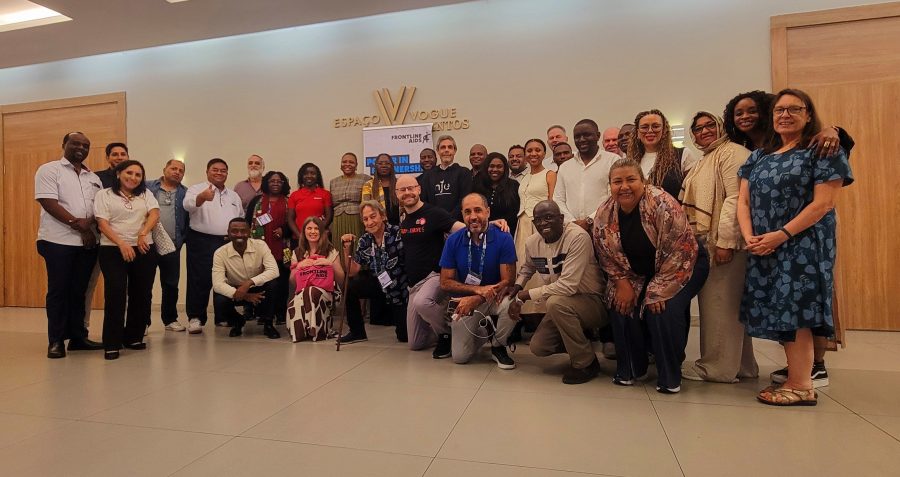
Frontline AIDS exists to add value to the global community of civil society organisations which constitute the Partnership. Our new strategy 'Power in Partnership' is rooted in a values-based relationship that puts power sharing at the heart of the Partnership. This is supported by a commitment to deepening mutual accountability which, as John Plastow, Frontline AIDS Executive Director explains, has been reinforced with the development of a new Learning and Accountability Framework.
For three decades, Frontline AIDS has championed a simple but powerful idea: the global HIV response is strongest when it is led by communities themselves.
Long before ‘localisation’ and ‘shifting power’ became common development language, Frontline AIDS was investing in and elevating civil society organisations that understood the realities of HIV in their own communities. These organisations were not delivery agents for a global agenda. They were, and remain, the architects of change, advocates for rights, and drivers of locally led responses that save lives.
Over twenty years ago, Frontline AIDS recognised the limitations of traditional international NGO models built around country offices and hierarchical relationships. Instead, it chose a different path: becoming a global partnership of civil society organisations. Membership is voluntary, collaboration is rooted in shared purpose, and relationships are not defined by resource transfer.
This was not simply an organisational restructure. It was a statement of intent.
That identity rests on our ability to convene. By connecting civil society organisations across regions, cultures and contexts, our partnership turns collective experience into collective influence. Local voices gain greater visibility and common challenges generate shared solutions.
Shifting power in how we govern
In 2022, the creation of the Partnership Council marked a fundamental shift in how our partnership is governed. The Council brings together eleven equal partner leaders: elected representatives from six global regions, alongside me as Executive Director of Frontline AIDS. Each of us has the same voice and vote in shaping the future of the partnership. It is more than a governance structure. It is an exercise in shifting power, ensuring that decisions affecting the partnership are increasingly made by those closest to the communities it serves.
The same philosophy runs through our current strategy (2026 – 2030), Power in Partnership. Developed collectively with partners, it signals a deliberate move to anchor our identity, priorities and purpose in the needs and aspirations of our membership. It recognises that the future of Frontline AIDS is inseparable from the future of the organisations that make up the partnership.
Fostering a collective culture of learning and accountability
The journey doesn’t stop there. We’re now deepening our commitment to mutual accountability through a recently completed Learning and Accountability Framework. Developed under the leadership of the Partnership Council, the framework establishes how Frontline AIDS and its partners are accountable for their contributions to shared goals. It also fosters a culture of learning, transparency and collective responsibility.
This is what genuine partnership looks like: not simply shared ambition, but shared accountability.
The need for such a model has never been greater. Civil society’s voice is critically important in the global AIDS response, yet organisations that champion marginalised communities face shrinking civic space, political pressure and growing uncertainty. Meanwhile, shifts in the global health architecture risk overlooking the indispensable role of civil society and authentic community leadership in achieving lasting health outcomes. We work to ensure that community voices are not fragmented or sidelined, building a stronger, more connected and more influential movement, capable of shaping policy, defending rights and driving progress.
Thirty years on, our founding conviction is still the same: communities are not beneficiaries of change. They are the leaders of it. Progress is built when power is shared, voices are heard and partnerships are genuinely led from the front lines. Today, that mission is more essential than ever.