

“It’s very satisfying to help other young people”

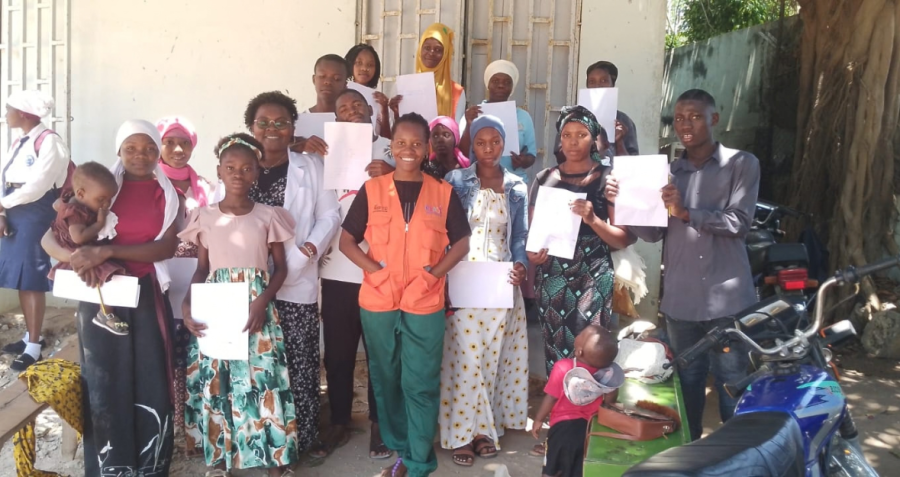
Peer supporter Domingas counsels young people living with and affected by HIV to help them overcome any difficulties they face. She was trained by REPSSI, the region’s leading authority on mental health and psychosocial support.
My name is Domingas. I’m 24 and am in my third year of studying public administration in Pemba, Mozambique.
I’m openly living with HIV and my viral load is currently undetectable. I’ve been a peer supporter for three years. I was supported by one myself so when the opportunity came up, I accepted because I believe that it’s important to help young people living with HIV to overcome any difficulties they face.
One-on-one support
If somebody has been diagnosed as HIV positive, then I convince them to go for treatment. I call them regularly and carry out home visits. I also hold support groups with other young people living with HIV to encourage and motivate the person who is newly diagnosed.
Before starting, I had to go to Maputo for a training course with the REPSSI network. I also received training as a psychologist. The most important thing that I learnt during the training is to have self-confidence and to place myself in the shoes of others.
The biggest challenge is when we have to support somebody who doesn’t accept their status and doesn’t want to receive treatment. In such a situation, I speak to them privately and tell them about my own status. I tell them that it’s not the end of the world, that treatment is available and that it’s still possible to live a good life.
Not alone
I was 18 when I was diagnosed with HIV and think that one of the most important things is the support of your family. If your family isn’t with you, that can be very difficult.
When I first knew my status, I felt inferior to other people. I didn’t want to mix with anybody. I felt very alone and I thought that only I had such bad luck. But my peer supporter showed me that I was not alone and that I could overcome this.
It’s very satisfying to help other young people to see that, with my support, they can have a normal life. The best thing is to see them accepting their status. It gives me great pleasure when I have contributed to a person resolving their problems and adhering to their treatment plan.
If I had the chance to sit down with my 18-year-old self, I would congratulate her on the life she has gone on to lead!
Sharing stories
A friend of mine was diagnosed with HIV but he didn’t accept it. He didn’t want to talk about it. I gave him my phone number and, after a certain time, we spoke and he told me that he didn’t understand how it had happened. His partner’s result was negative.
So I organised a peer support group and asked him to come and take part. He met other people in the same situation and we all shared our stories. He saw that he wasn’t alone and understood that it’s possible to live well with HIV.
Very soon after, he came back to the health unit and agreed to go on [antiretroviral] treatment. Unfortunately, he ended up separating from his partner but he carried on with the medication and with the support group and today he’s in a new relationship. He has disclosed his status to his new partner, and at the moment his viral load is suppressed.
Expert advice
Every Friday we talk about our work with the REPSSI team: the difficulties we face and the more challenging cases we are managing, and they advise us what to do.
I had somebody who, at one point, didn’t want to continue with the antiretroviral treatment. He shut himself away. I went to visit him at home but he didn’t want to tell me what was happening, so the team suggested that I consult with one of their psychologists.
We went to see the psychologist together and after they spent time with him, he went back on treatment and everything went back to normal.
“We need more peer educators”
There are times when we see people and their viral loads are suppressed and it all goes very well. But occasionally they decide that they don’t want to take the medication.
When young people relapse, they need more contact instead of just once or twice a week. Sometimes one peer supporter is supporting 80 young people and cannot give each of them the same quality of care.
We end up having to choose the more vulnerable, and so others fall by the wayside. I think we need to give more attention to those receiving treatment and, to do that, we need more peer educators.
I want to commend and thank READY+ for the work that the programme is doing because it is saving young lives.
READY+ is part of a portfolio of programmes designed to build Resilient and Empowered Adolescents and Young people (READY). All READY programmes place adolescents and young people at the centre of design, delivery, monitoring and evaluation. The READY Movement is a coalition that supports young people in all their diversity to demand their right to a healthy life, led by the Global Network of Young People Living with HIV (Y+ Global), with support from Frontline AIDS and its partners.