

What AIDS 2026 told us about the state of the HIV response

 Eolann Mac Fadden Frontline AIDS
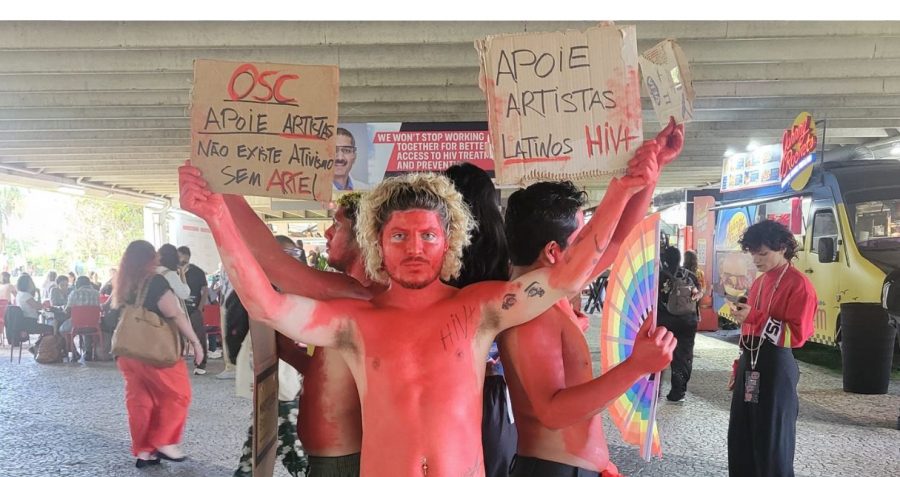
AIDS 2026 in Rio called on us all to rethink, rebuild and rise up. A conference in Latin America and the Caribbean was long overdue, and there was real enthusiasm for Brazil as host. But the backdrop was markedly different from the last time the conference met: unprecedented funding cuts have caused major disruption to HIV testing, prevention and community-led services. Even so, more than 7,000 delegates attended, and the conference gave the world a chance to learn about Brazil's approach: one that upholds the rights and the inclusion of key populations and integrates HIV services into Universal Health Coverage. Here are our key takeaways.
funding cuts are reshaping the response
Clinics are closing and prevention activities are shrinking. Half of our global partners (27 of 54) were affected by US foreign aid cuts. The PEPFAR Pulse study, which launched at the conference, found that prevention spending fell 51% and condom budgets fell 93% in the fiscal years 2024-2025, and that 43% of PEPFAR implementing partners have permanently stopped at least one prevention activity, such as condom distribution or PrEP provision.
Much of the conference’s energy went into new prevention technologies, but the data tells a different story about where the most urgent gap is. Condoms and other primary prevention tools have seen some of the sharpest declines of all, and if we’re serious about keeping HIV transmission down, that has to stay a central focus alongside the excitement about what’s new. This was the case we helped make, alongside our partners, at the “To fund or not to fund” satellite session, on pathways to sustaining HIV prevention as part of integrated approaches and health financing reforms.
Rays of hope: scientific innovation
Set against that backdrop, there were genuine bright spots. AIDS 2026 brought researchers, governments, industry, civil society and communities together to discuss demand creation, supply, health system readiness, price and access for long-acting PrEP, particularly lenacapavir, a twice-yearly injectable antiretroviral that has prevented almost all HIV infections in trials. Early in the week, there was strong opposition to Brazil’s lack of access to lenacapavir and its exclusion from voluntary licensing deals. By the end of the week, reports emerged of negotiations between the Brazilian government and ViiV to offer PrEP as cabotegravir, an injectable given every two months. These innovations can only change the course of the epidemic if the most marginalised populations in all countries can actually access them, and if they don’t come at the expense of the primary prevention work that is still so fundamental to the response.
a conference that under-addressed rights and integration
There was less of a focus on rights than in previous years, at exactly the moment when the global picture is getting worse. Mali, Burkina Faso, Ghana and Senegal all criminalised LGBTQ+ activities this year, and the latest UNAIDS report counts 66 countries criminalising same-sex relations and 14 criminalising transgender people. Frontline AIDS ran a session at the conference on countering misinformation in the HIV response, aimed at deepening understanding of how information, narratives and misinformation shape the response today, and at supporting collective learning and action in solidarity with communities whose lived realities are too often misunderstood, misrepresented or erased. Alongside it, we convened conversations in the Women’s Networking Zone on reclaiming reproductive justice, bodily autonomy and intersectional feminist leadership. It’s the kind of work that needs a much bigger platform than it had at Rio.
The same pattern showed up around co-morbidities, when two or more medical conditions present at the same time, as there were very few sessions on integrating HIV services with cervical cancer, STIs, hepatitis or TB. Yet we know this is critical for improving outcomes among people living with HIV, who often face several of these risks at once and are poorly served by health systems that treat them in isolation. Some of our own partners are already doing this work on the ground, including our community-led harm reduction programme, Innovate, Involve, Inspire, which is piloting joint approaches to hepatitis C and HIV in Nigeria, Kyrgyzstan and Egypt. This approach deserved far more visibility on the conference agenda than it received.
centring community leadership
A key thread running throughout the conference was the case for community leadership. Civil society and communities need a seat at the table, and we were glad the conference affirmed communities as the engine of the HIV response, alongside new models of leadership and partnership. Zambia offered a good example of a government engaging communities directly in service design and delivery, but funding for this kind of engagement remains a persistent gap.
Our partners brought that case to life across the week. Alliance for Public Health from Ukraine reflected on 25 years of community-led approaches, where sessions throughout the conference shared frontline learnings on building resilience to crises and sustaining HIV services in conflict and humanitarian settings. Y+ Global ran a skills lab for young people on community-led monitoring, and PATA closed the conference with a session on community roles in driving HIV service delivery.
Frontline AIDS’ also ran a session on the Transition Initiative, which works with coalition partners in Kenya, Malawi, Nigeria, Tanzania and Uganda, to support communities and civil society to build resilient, locally-led systems that can sustain HIV and sexual and reproductive health services through the current financing transition.
Scientific advances, committed national leadership and vibrant community activism all offer hope that AIDS remains achievable. Yet AIDS 2026 also served as a warning: with funding shrinking, rights under pressure, and millions still without access to prevention and treatment, success is no longer guaranteed. The aspiration to end AIDS by 2030 has unquestionably faltered and getting back on track will require acts of tremendous political will, accompanied by scientific innovation and funding. While Rio offered signs of hope, it also revealed the scale of the challenges ahead.