

UNAIDS report raises urgent questions as global HIV response is hit by funding cuts

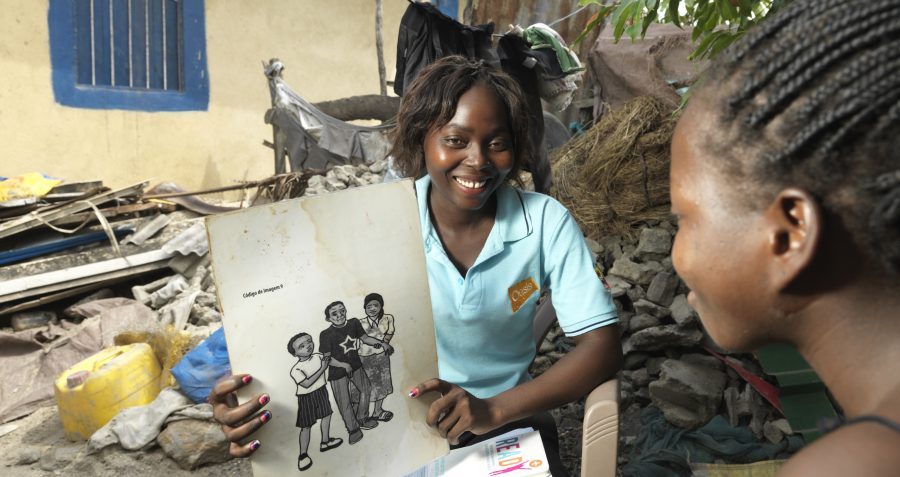
Global HIV progress is now in peril warns Frontline AIDS, following publication of the latest UNAIDS report on the HIV epidemic and response. While the latest estimates suggest AIDS-related deaths and new HIV infections declined in 2025, Frontline AIDS is urging caution in interpreting the data following a year of severe disruption to HIV services. Sharp falls in HIV testing and prevention raise real concerns that years of progress could be under threat and suggest that the true impact of the funding cuts may not yet be fully visible.
The latest global AIDS estimates from UNAIDS suggest that 570,000 people died of AIDS-related illness in 2025 – their lowest levels for more than 30 years. The number of new HIV infections also declined, with around 1.2 million people acquiring HIV in 2025, according to the UNAIDS report.
These estimates are surprising in the context of the major disruption to HIV services seen last year and with HIV testing down by nearly a quarter. While some countries and communities may have acted quickly to protect lifesaving treatment and care services, there is also a serious risk that more people are going undiagnosed, and more deaths remain uncounted.
Frontline AIDS warns that the headline declines in people acquiring HIV and dying from AIDS do not allow for complacency. They sit uneasily alongside what our community-based partners are reporting, and the scale of disruption to testing, prevention and community-led services, particularly those working with key and vulnerable populations.
The estimates show that even before last year’s funding cuts, key populations, which include sex workers, men who have sex with men and transgender people, were at disproportionately high risk of HIV infection compared to the general population and were being left behind in wider progress towards ending AIDS. UNAIDS estimates indicate that in 2024, they accounted for 49% of all new HIV infections globally, an increase from 44% in 2010.
The report indicates that significant treatment gaps also remain, with an estimated 78% of people living with HIV currently accessing lifesaving antiretroviral treatment, against a global target of 95%. Around 1.3 million children remain without access to antiretroviral therapy and around 11% of all AIDS-related deaths are among children, according to the report.
prevention programmes devastated by funding cuts
HIV prevention programmes have been hit hard in 2025 by reductions in foreign aid. The number of people receiving PrEP at least once during the year fell by 38% between 2024 and 2025 across the 62 countries reporting to UNAIDS. HIV testing also fell by 22%, while funding for condoms declined by more than 90% in some cases. These are not distant warning signs but evidence of serious harm already being done to the global HIV response.
Certain services are no longer available in the communities, such as condoms, but also access to PrEP [Pre-exposure prophylaxis] and PEP [Post-exposure prophylaxis] is a challenge. Hastings Mwanza, Advocacy and Resource Mobilisation Officer from Network of Journalists Living with HIV, Malawi.
These findings are backed up by what Frontline AIDS’ partners and other civil organisations are telling us. “Certain services are no longer available in the communities, such as condoms, but also access to PrEP [Pre-exposure prophylaxis] and PEP [Post-exposure prophylaxis] is a challenge,” said Hastings Mwanza, Advocacy and Resource Mobilisation Officer from Network of Journalists Living with HIV, Malawi.
New and innovative PrEP options, including long-acting lenacapavir, show real hope for HIV prevention. According to the report, by the end of March 2026, over 6,000 people – mostly women over 25 years old – received a lenacapavir injection at a public clinic or hospital in Eswatini, Kenya, Nigeria, Zambia or Zimbabwe.
While the cost of lenacapavir is now US $40 per person per year for lower-income countries, there is no agreement on prices for middle-income countries.
criminalisation of marginalised people is increasing
Alongside last year’s catastrophic funding cuts, criminalisation and stigma remain significant barriers to people receiving HIV services and criminalisation of marginalised populations is increasing.
Only 7 out of 193 countries did not criminalise either same-sex sexual activities, sex work, possession of small amounts of drugs, transgender people or HIV non-disclosure. Sex work is criminalised in 168 countries and same-sex sexual activity is illegal in 66 countries, with new criminal laws targeting same-sex sexual activity introduced this year in Trinidad, Tobago and Burkina Faso.
These laws are only one visible sign of a wider anti-rights mobilisation that is fuelling hostility, shrinking civic space and creating a more dangerous environment for the communities most affected by HIV.
targets set to end aids: un high-level meeting
The UNAIDS report has been produced while discussions continue around the future of the UN Joint Programme on AIDS, following major cutbacks to the UNAIDS Secretariat last year, and a UN80 proposal that it be “sunset” in 2026.
The report highlights 16 ambitious new targets to end AIDS as a public health threat by 2030, recently published in the Global AIDS Strategy for 2026-31. A new Political Declaration on AIDS is also due to be agreed at next week’s UN High-Level Meeting in New York, although negotiations have been challenging, with some governments reluctant to make commitments on HIV financing, equitable access to HIV technologies, and health and human rights for key and vulnerable populations.
“These estimates do not sit easily with what communities are telling us or with the disruption to HIV services we saw last year,” said John Plastow, Executive Director, Frontline AIDS. “We have made impressive progress, but we are already starting to see the impact of funding cuts on people’s lives, and we urgently need renewed commitment from governments to meet the new global targets and to make ending AIDS by 2030 a priority”.