

Pride month celebrations challenged by anti-rights movements

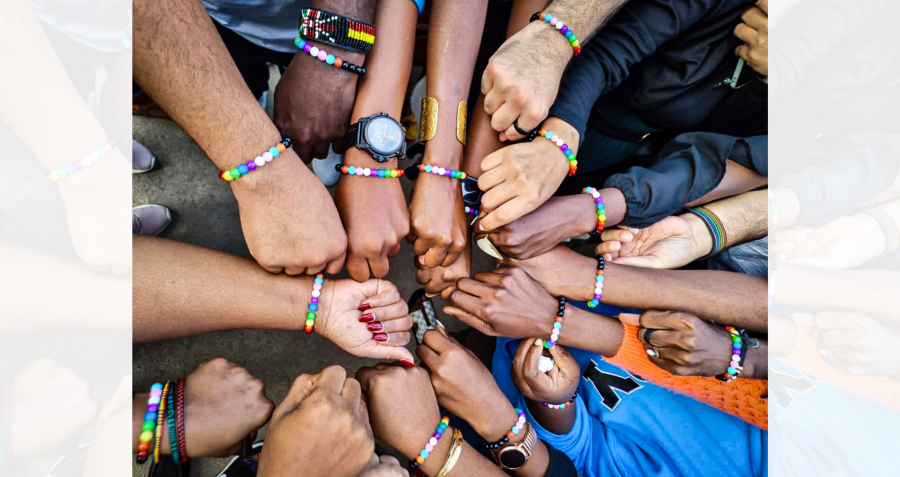
June is meant to be a moment of joyful visibility, a show of strength and solidarity for LGBTQ+ people around the world. But anti-rights threats risk destabilising communities and rewinding hard-won progress on HIV.
This year’s global Pride events begin against a backdrop of growing anti-LGBTQ+ sentiment and misinformation, intimidation and violence driven by evangelical religious groups and populism.
In Ghana, the country’s parliament has recently approved a human sexual rights and family values bill.
If it is signed into law by the Ghanaian president John Dramani Mahama, as is expected, it will be illegal for Ghanaians to even identify as LGBTQ+, with a prison sentence of up to three years. It would not only criminalise homosexuality, but also impose sentences on advocates and healthcare workers who offer lifesaving care and support to people from LGBTQ+ communities.
A potentially damaging collision of political and social homophobia will be evident at the 4th African Regional Inter-Parliamentary Conference on Family Values and Sovereignty, which begins in the country’s capital Accra on 3 June. The conference is believed to be a vehicle to promote the African Charter on Family Values and Sovereignty, a draft document designed to enshrine anti-LGBTQ+ discrimination and roll back women’s reproductive rights across the continent.
The Ghanaian LGBTQ+ community will stand for dignity and visibility despite barriers to healthcare, stigma and legal uncertainty. Ghanaian human rights advocate
The President of Ghana, John Dramani Mahama, is expected to attend the conference raising concerns that it will unduly influence his decision to sign the bill into law. This chain effect has already been seen in Uganda. Three months after attending the 1st inaugural Africa Inter-Parliamentary Conference on Family Values conference, Uganda’s President Yoweri Museveni signed the Anti-Homosexuality-Act into law.
“In a moment that should be defined by love and humanisation, we are instead witnessing the deliberate harm of communities in the name of morality,” says Nomtika Mjwana, Lead: Human Rights at Frontline AIDS. “It is a regressive shift that exposes the contradictions of those who claim to advance justice while eroding its foundations.”
“The Ghanaian LGBTQ+ community will stand for dignity and visibility despite barriers to healthcare, stigma and legal uncertainty,” said one Ghanaian human rights advocate who chose to remain anonymous to ensure their safety. “Our resilience is not a local story but a global call to action for the international community to uphold human rights and for grassroots movements across Ghana to keep building a space of care for the minority.”
COMMUNITIES AND HUMAN RIGHTS DEFENDERS ARE GOING UNDERGROUND
When human rights abuses are written into law, they do more than slow the response to HIV and broader global health challenges. They actively dismantle it.
We are seeing a rise in legislation that criminalises already disenfranchised communities and restricts access to health services, pushing people further from care. At the same time, human rights defenders are increasingly being targeted for simply protecting dignity and access.
Earlier this year, the President of Senegal, Bassirou Diomaye Faye, signed a new law which doubled jail terms for people who engage in same-sex acts or “promote” homosexuality, leading to widespread reports that members of Senegal’s LGBTQ+ community were being forcibly arrested, removed from their homes, whilst others fled the country.
Amidst rising intimidation, many community organisations and others providing health services have gone underground. The result: growing concern that people from the LGBTQ+ community are being left without access to lifesaving HIV treatment and care.
Attempts to silence opposition to anti-rights movements also extends to global institutions. Dr Tlaleng Mofokeng, a physician and human rights advocate who is the UN Special Rapporteur on the right to health, has faced sustained pushback from anti-rights actors.
Her work has advanced discussions on sexual and reproductive health and rights and gender justice, as well as on the factors that create barriers and access to healthcare. Yet coordinated media commentary from some media outlets, public criticism, and organised campaigns in some countries are challenging the legitimacy of the human-rights based approach to health that she advocates.
Much of this response seeks to frame Dr Mofokeng’s work as overly activist rather than grounded in international human rights norms. This pattern sits within a wider global trend of increasing pressure on human rights defenders at all levels, including independent experts, community advocates, and grassroots organisers working on gender, sexuality, and health in order to deliberately narrow civic space and the reach of human rights.
COUNTERING MISINFORMATION
The dangers of misinformation could be clearly seen in the build-up to the new and repressive law being passed in Senegal in March this year, where various media outlets repeatedly reported on “coordinated networks” of gay men allegedly spreading HIV throughout the country. There is no evidence to support this claim that has led to serious breaches of medical confidentiality.
You cannot fight HIV in secret. Every law that criminalises key populations is yet another barrier between a person and a test, treatment, or life.Community-based organisation member, Senegal
Growing misinformation about LGBTQ+ people can jeopardise public health efforts, resulting in them experiencing stigma and discrimination at healthcare facilities and within their communities.
“In Senegal, the expansion of criminalisation has had an immediate and devastating effect: key populations are shunning health services for fear of being reported,” says a member of a community-based organisation in Senegal who also chose to remain anonymous for safety reasons. “You cannot fight HIV in secret. Every law that criminalises key populations is yet another barrier between a person and a test, treatment, or life.”
We are facing a precarious moment for LGBTQ+ rights. Frontline AIDS, alongside our partners, are accelerating efforts to provide accurate information to advocates so they can challenge these narratives.
The tools and resources we have developed seek to support collective learning and are grounded in the lived realities of people whose voices are being erased.Nomtika Mjwana, Lead: Human Rights, Frontline AIDS
Two new briefs aim to counter misinformation on HIV prevention and LGBTQ+ communities and to deepen understanding of how information, narratives, and misinformation shape the HIV response today. They were developed with Frontline AIDS Digital Advocacy Working Group, which includes a range of community organisations across sub-Saharan Africa, and our partners working at the intersection of HIV and human rights.
“Countering anti-rights actors in the HIV and global health space requires more than resistance. It requires building solidarity and unity across movements while actively confronting misinformation and misleading ideological references,” says Nomtika. “The tools and resources we have developed seek to support collective learning and are grounded in the lived realities of people whose voices are being erased.”
As civic space and resources continue to shrink, we must work collectively and with intention, to strengthen coordinated action, protect rights and sustain progress.