

Reports reveal global HIV response at ‘critical turning point’

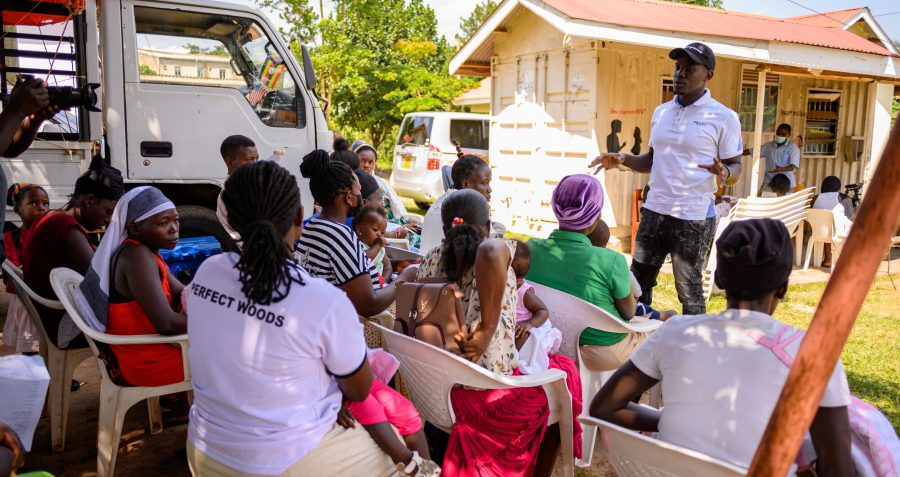
New reports show 2.7 million people across eight countries at risk of losing HIV prevention services and widespread disruption to HIV testing and treatment – yet some African governments beginning to explore innovative solutions.
Today, on World AIDS Day (1 December), Frontline AIDS has published the first country reports from its landmark Transition Initiative, revealing the most detailed evidence yet of how unprecedented cuts to international HIV funding are playing out across Africa. The reports cover eight African countries, five of which are directly participating in the initiative.
In 2025, Africa experienced the sharpest HIV funding contraction anywhere in the world. Major international donors scaled back or closed programmes across the continent, leaving countries facing 30–70% cuts to their HIV prevention budgets and creating immediate gaps in services.
While the fallout has been immediate and devastating – with widespread disruption to HIV treatment, millions at risk of losing prevention services and early increases in new HIV infections and AIDS related deaths – the reports also highlight emerging examples of governments partnering with communities on innovative steps to protect their HIV responses.
Frontline AIDS’ Transition Initiative was launched in May 2025 to empower communities and civil society to shape the transition of HIV services from international donors to sustainably financed government- and community-led systems. Its aim is a future where local communities are at the heart of HIV service delivery, with governments as strong, accountable partners, ensuring access to prevention, treatment and care for all.
The new reports were developed by coalitions of people living with HIV, young people, key populations and civil society organisations across eight African countries: Angola, Kenya, Malawi, Mozambique, Nigeria, Tanzania, Uganda and Zimbabwe.
Key findings include:
- 2.7 million people at risk: Across the eight countries, more than 2.7 million people are at risk of losing access to tailored HIV prevention services, most of them from key populations disproportionately affected by HIV.
- PrEP access collapsing: Multiple countries report sharp declines in access to oral PrEP. In Nigeria, usage has dropped by more than 85% this year alone; in Kenya, the number of people accessing oral PrEP has halved. Meanwhile, studies rolling out new PrEP options were halted, leaving users without access to any form of prevention.
- Treatment access declining: In some countries, people living with HIV are already losing access to the HIV medication that keeps them well and prevents onward transmission. In Mozambique, the number of people receiving antiretroviral treatment fell by around 40% this year.
- Progress in reverse: Some countries are already seeing increases in new HIV infections and AIDS-related deaths. Zimbabwe has recorded its first rise in AIDS-related deaths in five years. Kenya has seen 24,000 more new HIV infections this year, reversing a three-year downward trend.
- Women facing rights abuses: Cuts to tailored programmes are stripping away safe spaces and specialist support for women living with and at risk of HIV, leaving them exposed to gender-based stigma. In Tanzania, nearly a third of women with HIV accessing public clinics had their status disclosed without consent, and nearly one in five were denied care altogether.
- Rising stigma affecting key populations: As community-led services shrink, key populations are being pushed into overcrowded public clinics where stigma and abuse are far more common. In Uganda, the Human Rights Awareness and Promotion Forum reports that since the Anti Homosexuality Act was signed, at least one person has faced a human rights violation every day because of their sexuality.
These findings are stark. Funding cuts have pushed prevention services to the brink, and we are already seeing progress slip backwards. This is a critical turning point for the global HIV response. John Plastow, Executive Director at Frontline AIDS
“It is also a moment to reset. In several countries we are seeing the first signs of governments and communities working together to build more sustainable, home-grown HIV responses,” said Plastow. “It’s early days, and the challenges are immense, but the direction of travel is clear. With real investment and political will, this transition can sustain – and ultimately strengthen – the global fight to end AIDS.”
In the absence of alternative funding, national governments face unprecedented pressure to sustain their HIV responses. While the transition is at an early stage, some countries are beginning to explore new financing models, despite rising debt burdens and shrinking public budgets. Examples include:
- Increased domestic financing: While no country has yet reached the Abuja Declaration target of 15% health spending, some have significantly increased their investments. For example, Uganda has doubled its national health budget from 4% to 8.1% for the 2025/26 financial year.
- Ringfenced taxes for health: Tanzania is proposing levies on minerals, petrol, imported vehicles and heavy machinery to increase domestic health financing. Zimbabwe’s 5% health levy on mobile airtime/data and 3% AIDS levy on incomes are helping to stabilise parts of the HIV response.
- Expanding social contracting: In Zimbabwe, new guidelines allow community-led organisations to receive direct funding – and US-dollar grants are already being channelled to support HIV testing and treatment.
For media
For comments, interviews or information please contact the Frontline AIDS media team: communications@frontlineaids.org